

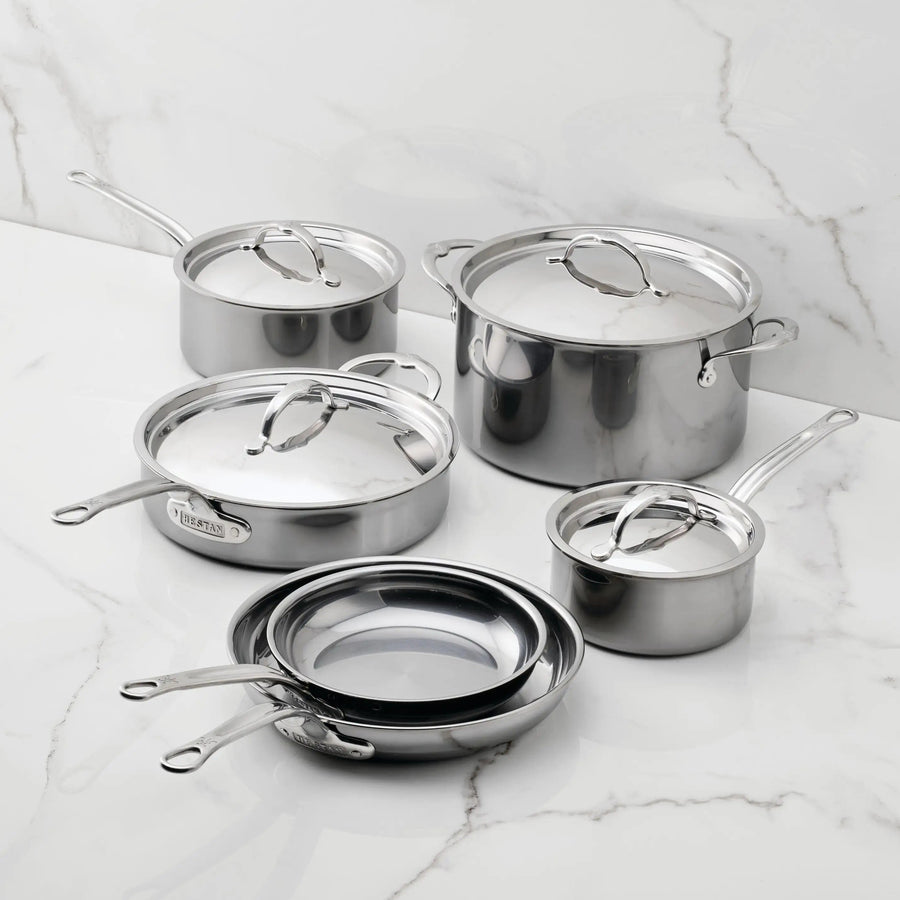


The Stainless Steel Learning Curve: Mastering Heat Control Like a Pro
There is a common myth that stainless steel cookware means food will always stick to the pan and cleanups will follow. But the truth is that the problem is rarely the pan itself and almost always the technique. Once you master heat control, stainless steel transforms from finicky to formidable. This skill allows you to sear beautifully, thanks to instant feedback and incredible browning potential. Add in modern innovations like NanoBond, ProBond, and CopperBond, and your stainless cookware becomes a powerful culinary partner that rewards your technique.
In this post, you will discover why heat control is the foundation of stainless steel success, follow a step‑by‑step path that builds your confidence, explore how Hestan elevates heat mastery with technical design, and acquire real‑life examples for applying precise heat with grace. Turn frustration into finesse by mastering the stainless heat curve like the pros do!

Why Heat Control Is the Key to Stainless Steel Success
Stainless steel cookware may seem unremarkable until you consider its underlying mechanics and how it interacts with heat. Unlike nonstick or cast iron, stainless steel rewards attention and precision. It is not about flashy coatings or extreme thickness—it’s about responsiveness and consistency.
At the core of this performance is heat conductivity and retention. Plain stainless steel on its own doesn't conduct heat well, which is why clad stainless—with conductive metals like aluminum or copper layered inside—is the gold standard for serious cooks. Hestan’s ProCore™ aluminum, used in ProBond Forged, ProBond Luxe, Thomas Keller Commercial Clad, and NanoBond, increases conductivity by 35% over traditional aluminum-core cookware.
Here’s what responsive heat control delivers in everyday cooking:
-
Even heat distribution: No hot spots that burn one side while undercooking the other
-
Responsive adjustment: Turns from high to low instantly—just like a gas range reacts
-
Perfect searing and browning: Steady, high heat develops a golden crust without sticking
-
Controlled simmering: Ideal for reductions, custards, and pan sauces
-
Minimal oil usage: Proper preheating allows food to release naturally
This level of control lets you treat your cookware like a precision instrument. Once you learn to manipulate heat, stainless steel becomes second nature and is a joy to cook with.
Common Misconceptions About Stainless Steel
Many home cooks hesitate to use stainless steel because of outdated myths. Let’s clear up the most common misunderstandings:
-
Food always sticks. This is one of the most common misunderstandings. Sticking usually happens because food was added to a cold pan. Stainless steel becomes stick-resistant when it’s properly preheated. When a drop of water beads and dances on the surface, the temperature is ideal for cooking.
-
Stainless steel burns food. Another myth. Food burns when heat is too high and uncontrolled—not because of the material. Stainless steel is very responsive, meaning it heats quickly and retains heat well. Start at medium heat and let the pan stabilize before adjusting upward.
-
Stainless is high-maintenance. This may have been true decades ago, but modern stainless—especially Hestan’s NanoBond—is designed to reduce upkeep. NanoBond’s titanium-reinforced surface resists stains, salt corrosion, and even high heat tarnish. You can even put it in the dishwasher with aggressive detergents, and it still looks like new.
-
Only professional chefs can use it. The learning curve is real, but it's not steep. Stainless steel actually encourages better cooking technique, especially once you understand how to use heat in your favor.
Step-by-Step Guide to Mastering Stainless Steel Heat Control
Like any craft, stainless steel cooking becomes easier when you break it into stages. These simple steps guide you from setup to confidence:
Step 1: Preheat Properly with the Water Bead Test
Start your pan over medium heat for one to two minutes. Then drop in a teaspoon of water. If the water balls up and glides across the surface like mercury, you’ve reached the right temperature. This is your sign to add oil. Adding oil too early (to a cold pan) results in sticking, uneven browning, and lost confidence.
Step 2: Adjust Heat Mid‑Cook
Once you’re cooking, watch how the food responds. Is it browning too fast? Turn it down. Not sizzling at all? Turn it up slightly. ProBond reacts almost instantly to small adjustments, making it a great teacher of intuitive heat control. With time, you’ll learn to adjust based on sound, smell, and sight, just like the pros.
Step 3: Embrace Deglazing
Fond is not something to fear. It’s the key to flavor-rich sauces. After cooking, pour a splash of wine, broth, or water into the pan while it’s still hot and scrape gently. The fond dissolves, lifting flavor and cleaning the pan. It’s a trick used in professional kitchens every day, and it turns cleanup into part of the meal.
Step 4: Practice with Purpose
Start with simple recipes: seared chicken thighs, caramelized onions, or pan-roasted vegetables. As you gain comfort, move to more delicate proteins and sauces. Mastery happens through repetition, and the results are worth it. Over time, your stainless steel cookware will feel less like a tool and more like an extension of your hand.

Where Hestan Collections Make the Difference
While all stainless steel rewards good technique, Hestan’s cookware lines take the learning curve and make it faster, smoother, and more forgiving. Here’s how each collection supports better heat control.
-
NanoBond: States a proprietary titanium nano‑layer structure that is about 400 percent harder than standard stainless and completely non‑porous. It resists staining, scratching, and salt pitting. The surface sustains high heat up to 1050°F and is dishwasher safe without degrading.
-
ProBond Forged and ProBond Luxe: Built on tri‑ply stainless steel with a ProCore™ aluminum core, offering approximately 35 percent greater heat conductivity than typical clad cookware. It features ergonomic handles, sealed rims for drip‑free pouring, flush rivets for clean stacking, and strong performance up to 600°F.
-
CopperBond: Brings the best of copper’s conductivity in a kitchen‑friendly design. A thick copper core is wrapped in stainless steel, making it the only copper cookware compatible with induction cooktops, delivering unmatched responsiveness and temperature control without sacrificing durability.
-
Thomas Keller Commercial Clad: Designed in collaboration with Chef Thomas Keller and built for performance in both home and professional kitchens. This line uses 18/10 stainless steel with a ProCore™ aluminum core, seamless handles, and space-saving universal lids. It is oven and broiler safe up to 600°F, emphasizing professional-level heat responsiveness, durable construction, and refined handling.
Everyday Cooking Examples of Stainless Steel Heat Control
These scenarios show how precise temperature management translates into real meals:
-
Searing Proteins (Chicken, Steak, Fish): Preheat your pan using the water bead test. Add a high‑smoke‑point oil. Once shimmering, place your protein and leave undisturbed to form a golden crust. Only flip when the food releases naturally.
-
Cooking Delicate Foods (Eggs, Crepes, Scallops): Start on medium or medium‑low. The slick surface of NanoBond helps delicate proteins release cleanly and cook evenly, reducing the stress of eggs that stick or scallops that tear.
-
Building Sauces with Fond: After searing, reduce the heat and add a dash of liquid to deglaze. Scrape the fond into your sauce, reduce gently, and finish with butter for a silky, flavorful emulsion that also simplifies cleanup.
Cleaning and Care as Part of the Learning Journey
One of the biggest turning points in the stainless steel learning curve is discovering that cleaning becomes part of the cooking process. With the right techniques, you’ll clean as you cook and rarely end up scrubbing or soaking. Deglazing after searing, for example, not only builds your sauce but removes most food residue. What’s left behind is easily wiped away or rinsed under hot water.
-
NanoBond: Its surface is non-porous and naturally “nonstick like” once preheated properly. Even sugar-based sauces or tomato-based reductions will wipe away with a soft sponge. It can go in the dishwasher and still look showroom-new.
-
ProBond Forged, and Thomas Keller Commercial Clad are also dishwasher-safe. Their sealed rims and flush rivets prevent buildup and rust, making maintenance simple. For baked-on stains, a quick soak followed by gentle scrubbing with non-abrasive cleaner does the job. With proper technique and a few go-to cleaning tools, your pans will stay spotless and high-performing for decades. The best part? You’ll never worry about replacing a “worn-out” nonstick pan again.
Your Stainless Steel Cookware Journey Begins with Hestan
Mastering stainless steel cookware is about learning to read and control heat. Hestan empowers home cooks to work precisely and confidently. Each line brings its own strengths—whether unmatched surface resilience, agile heat response, or indulgent elegance. Start small tonight: try the water-bead test, practice a simple sear, and see how Hestan helps you turn technique into confidence. The rewards—perfect sears, flawless sauces, and cookware that shines for years—are lifelong.


